
Home / Repair & leveling
Crawl space repair and floor leveling
In the Jackson area, a sloping floor over a crawl space is often a support problem, a soil problem, or both. Repair usually means re-supporting the framing so the floor is level and stays that way as long as it can.
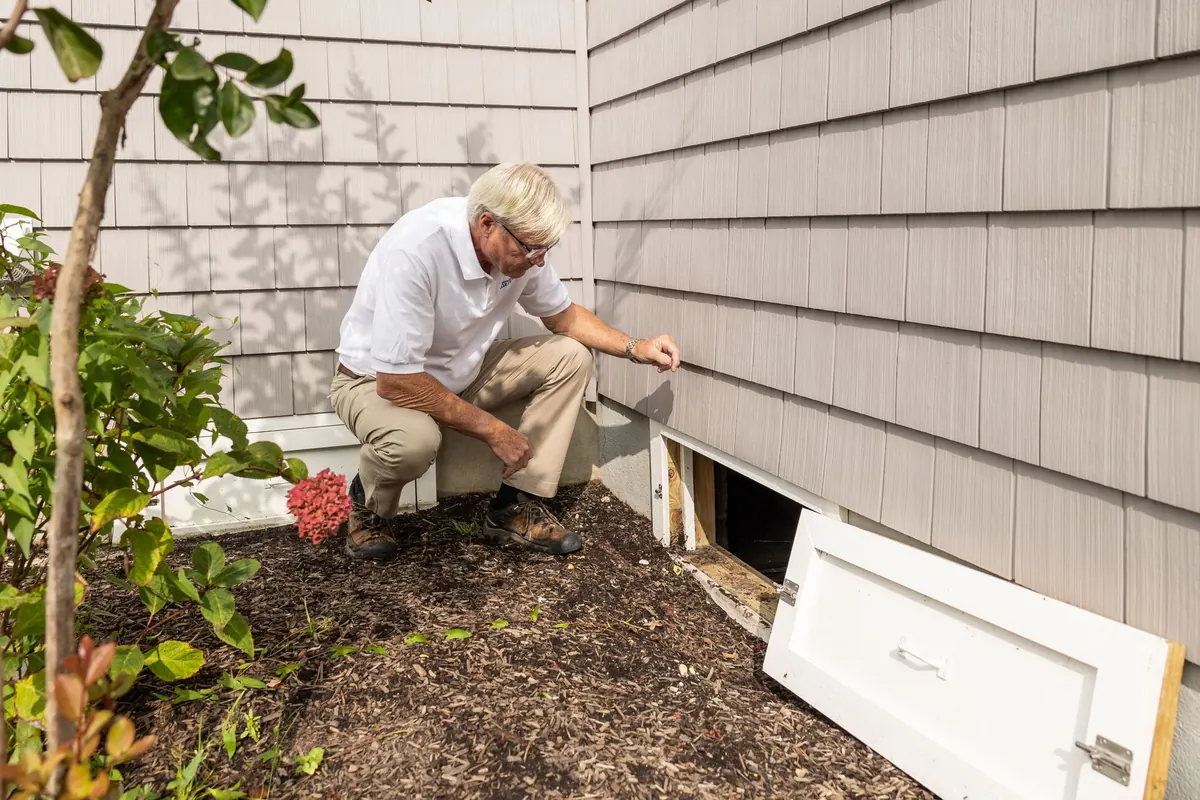
A house on a crawl space usually stands on rows of piers or a perimeter wall, with wood beams across the piers and joists across the beams. If any of those supports moves, the floor above moves with it. On expansive clay, the ground under a pier can rise when it gets wet and drop when it dries out, so movement here can be seasonal, not just one-time settling.
Common repairs
- Re-shimming. Adjusting or replacing the shims between pier tops and beams to bring a floor back to level. On a house that moves with the seasons, this may need doing again later.
- New or rebuilt piers. Replacing cracked, leaning, or undersized piers, sometimes with a larger footing so the load spreads over more soil.
- Adjustable steel supports. Steel posts that can be adjusted over time, set on a pad or footing.
- Beam repair. Replacing or doubling a beam that has cracked, rotted, or sagged between piers.
- Joist sistering. Fastening new lumber beside damaged or notched joists.
- Sill plate replacement. Replacing rotted wood where the framing sits on the foundation wall.
Leveling is not the same as fixing the cause
Re-shimming a floor can make it level today. If the clay under the piers keeps getting wetter and drier unevenly, the floor can drift again. That is why drainage matters so much here. Gutters that work, downspouts carried away from the house, and soil that slopes away from the foundation all help keep moisture under the house more even. See our drainage guide.
When to call a structural engineer
Some movement is bigger than a crawl space contractor should handle alone: large or growing cracks in the foundation walls, a wall that is leaning, floors that have dropped several inches, or damage after a repair that did not hold. In those cases, an independent structural engineer can assess the soil and the structure and write a repair plan that any contractor can price. Angi's foundation repair guide notes that a soil report can run $500 to $3,000. On Yazoo clay that report can be worth the money before a large repair.
Deep piers
For serious movement, some repairs use piers that go deeper, below the layer of clay that swells and shrinks the most. A well-documented local example is the Eudora Welty House in Jackson's Belhaven neighborhood, built in 1925. According to a case study in the ASCE Journal of Performance of Constructed Facilities, its restoration used fifty drilled piers and more than one hundred jacks. Most houses need far less than that, but the case shows how seriously this soil is taken here.
What to ask
- What is moving, and what do you think is causing it?
- Is this a shim adjustment, new supports, or framing repair?
- What footing goes under any new pier or post?
- Should I get an engineer's opinion first?
- What does the warranty say about future movement?
To have a contractor check your floor framing, get matched or call (601) 000-0000.
Have a contractor check what is under your floor
One request is all it takes. We will pass it to an independent crawl space contractor serving Hinds, Madison, and Rankin counties.